By Michaele Gantz, Mediator and Founder of Consenso Mediation | Serving Saratoga County, Albany Conty, Schenectady County and the surrounding areas
How online mediation can provide the same thoughtful communication, privacy, and problem-solving without requiring couples to meet in an office
For years, divorce mediation usually meant sitting across a table from your spouse and a mediator in the same room. Today, that is no longer the only option.
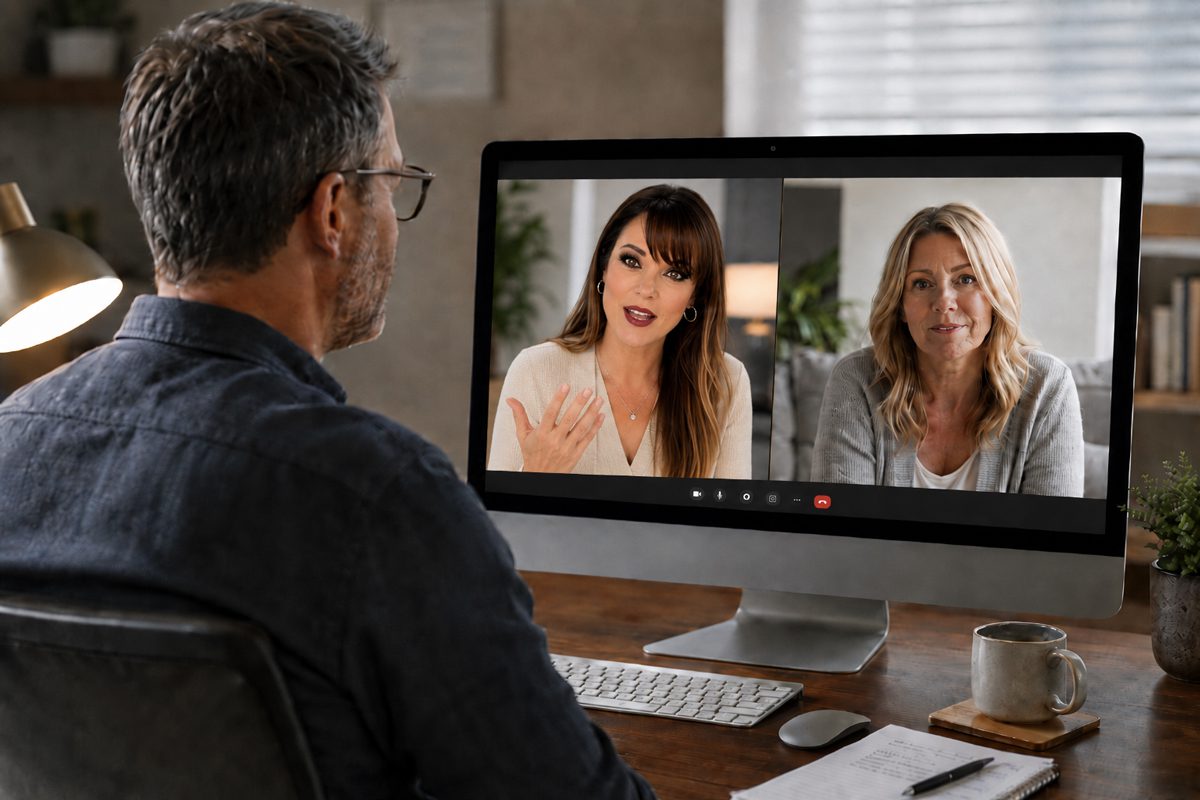
Virtual divorce mediation has made it possible for couples to work through parenting, finances, property, support, and other important divorce decisions without traveling to an office. Still, many people considering mediation wonder whether meeting online can really be as productive as meeting face-to-face.
For many couples, the answer is yes.
Virtual mediation changes where the conversation happens, but it does not change the purpose of mediation. Couples still have an opportunity to discuss concerns, consider options, ask questions, and work toward agreements with the guidance of a neutral mediator.
At Consenso Mediation & Divorce Coaching, Michaele Gantz offers both in-person and virtual divorce mediation for clients throughout Albany, Saratoga, Schenectady, and across New York State. Virtual sessions allow couples to participate from home while maintaining the same focus on respectful communication, thoughtful decision-making, and practical solutions.
What Actually Happens During Virtual Divorce Mediation?
Virtual divorce mediation works much like an in-person session.
Instead of meeting around a conference table, each person joins a secure video meeting from a private location. Michaele guides the conversation, identifies the issues that need to be addressed, and helps both people work through those issues systematically.
Couples can discuss many of the same topics virtually that they would address in person, including parenting plans, child support, spousal support, assets and debts, real estate, separation agreements, and expectations for future communication.
Documents can also be reviewed and shared electronically when appropriate. As a result, couples do not need to bring stacks of paperwork to every meeting or coordinate travel simply to discuss the next step.
In many respects, the format becomes secondary once the conversation begins.
What matters most is whether both people can communicate, receive guidance, and participate meaningfully in the decision-making process.
Can Couples Communicate as Effectively Online?
One of the most common concerns about virtual mediation involves communication.
Some people assume that sitting together in an office automatically creates better conversation. However, physical proximity does not necessarily make difficult discussions easier.
In fact, some people communicate more comfortably when they are in familiar surroundings.
Participating from home can remove some of the formality and tension associated with sitting across from a spouse in a mediator’s office. In addition, couples who experience significant tension may appreciate having some physical distance while still communicating face-to-face through video.
The American Bar Association has noted that virtual mediation can be just as successful at reaching resolutions as in-person mediation and may even help reduce negative emotions in particularly contentious disputes.
Of course, online communication has its own challenges. Body language can be harder to read through a screen, and a reliable internet connection becomes important.
However, when the technology works well and everyone arrives prepared, virtual sessions can still allow for focused and meaningful conversation.
Convenience Can Make Mediation Easier to Maintain
Convenience may sound like a minor advantage during divorce, but it can make a significant difference.
Parents are often balancing work, school schedules, extracurricular activities, appointments, and parenting responsibilities. Meanwhile, spouses may already be living in separate communities or even different parts of New York.
Adding travel time to every mediation session can make an already complicated schedule more difficult.
Virtual mediation removes much of that logistical burden.
Clients can participate from home or another private location rather than coordinating transportation and commuting to appointments. Consenso specifically offers virtual mediation throughout New York State, which means geography does not necessarily prevent couples from working with Michaele.
That flexibility can also make sessions easier to schedule.
When fewer logistical obstacles stand in the way, couples may find it easier to maintain momentum and continue working through unresolved issues rather than repeatedly delaying meetings.
For clients wondering how much of the overall divorce process can be handled remotely, Consenso’s guide to finalizing a divorce online in New York explains how virtual mediation, electronic document sharing, remote professional meetings, and electronic filing may fit into the larger process.
Does Virtual Mediation Still Feel Personal?
This concern comes up frequently.
Divorce is deeply personal, so some clients worry that an online meeting will feel detached or transactional.
However, the mediator’s approach matters far more than the physical room.
Video conferencing still allows participants to see one another, listen in real time, ask questions, and have direct conversations. Meanwhile, Michaele continues to guide the discussion, slow things down when necessary, clarify concerns, and help both people remain focused on the issues that need resolution.
Consenso’s virtual mediation approach is designed to maintain the same compassionate and collaborative process used during in-person sessions.
For some clients, being at home actually makes the experience feel more personal.
They may feel less intimidated, more comfortable asking questions, and better able to remain calm during emotionally difficult discussions.
What About Privacy and Confidentiality?
Privacy is understandably important during any divorce mediation.
Virtual mediation should not mean casually joining a meeting from wherever you happen to be. Instead, each participant should choose a private environment where others cannot overhear the discussion and where interruptions are unlikely.
Technology also needs to be used thoughtfully. Password protection, waiting-room controls, restrictions on recording, and careful handling of electronic documents can help protect virtual sessions.
New York courts describe confidentiality as an important feature of mediation and explain that mediators should discuss both confidentiality protections and any applicable exceptions with participants.
Therefore, couples should treat a virtual mediation session with the same level of privacy they would expect in a mediator’s physical office.
That may mean closing the door, using headphones, silencing notifications, and making sure children, family members, coworkers, or other people cannot hear the conversation.
Virtual Mediation Can Reduce Some Sources of Tension
Meeting online can offer another benefit that is easy to overlook: physical space.
Not every divorcing couple feels comfortable sitting side by side or directly across from one another.
Even when both people genuinely want to mediate, being in the same physical room can sometimes increase tension.
Virtual sessions create a little distance while preserving direct communication.
That separation may help some clients remain focused on the actual issue being discussed rather than reacting to the discomfort of sharing the same physical space.
The goal is not to avoid difficult conversations. Mediation still requires people to address important and sometimes emotional subjects.
However, reducing unnecessary tension can make those conversations more productive.

Is Virtual Mediation Faster Than Meeting in Person?
Virtual mediation is not automatically faster simply because it occurs online.
Couples still need enough time to gather financial information, consider options, discuss parenting arrangements, and reach informed decisions.
However, online sessions can eliminate some common sources of delay.
There is no commute to coordinate, meeting locations do not need to be arranged, and spouses who live far apart can participate without travel.
As a result, scheduling may become easier, particularly for busy parents and professionals.
Virtual meetings may also make it easier to schedule follow-up conversations when couples need additional time to resolve one particular issue.
The important goal is not to rush through divorce. Instead, it is to remove unnecessary logistical barriers while preserving enough time for thoughtful decision-making.
When Is In-Person Mediation the Better Choice?
Virtual mediation works extremely well for many couples, but that does not mean it is automatically the best format for everyone.
Some people simply communicate better in person. Others may struggle with technology, lack a private place to participate, or feel more comfortable sitting in the same room with the mediator.
There can also be situations in which mediation itself may not be appropriate.
For example, Consenso notes that situations involving coercion, domestic violence, severe power imbalances, or an unwillingness to participate in good-faith discussions may require a different approach.
That is why the decision should not simply be, “Online or in person?”
A better question is, “What setting gives both people the best opportunity to communicate safely and participate fully?”
For some couples, the answer will be an office.
For many others, it will be their own homes.
Does Virtual Mediation Produce the Same Kind of Agreement?
The objective remains the same whether mediation happens online or in person.
Couples are still working toward clear agreements that address the practical issues involved in separating their lives.
The technology does not determine the quality of the agreement. Instead, the quality depends on the information available, the issues discussed, the willingness of both people to participate, and the care taken when developing solutions.
Virtual mediation can address the same major divorce issues as an in-person session.
Therefore, choosing to meet online does not mean choosing a simplified or less thorough version of mediation.
It simply changes the meeting location.
Virtual Mediation Also Expands Your Choice of Mediator
Traditionally, location played a significant role in choosing a mediator.
Couples often searched for someone whose office was reasonably close to both spouses. That could become complicated when people lived in different counties or when one spouse relocated after separation.
Virtual mediation removes much of that limitation.
Michaele works virtually with clients throughout New York State in addition to providing services in Albany, Saratoga, and Schenectady Counties.
That gives couples more freedom to choose a mediator based on approach, experience, and fit rather than simply choosing the closest office.
For clients interested specifically in working remotely with Consenso, the Virtual Divorce Mediation page explains more about how online mediation works and who may benefit from it.
Is Virtual Divorce Mediation as Effective as In-Person Mediation?
For the right couple, it certainly can be.
Effective mediation depends much more on the quality of communication, preparation, mediator guidance, and willingness to problem-solve than it does on whether everyone shares the same physical room.
Virtual mediation can provide meaningful face-to-face conversation while adding convenience, flexibility, and physical distance when that distance is helpful.
Most importantly, couples still maintain control over their decisions.
They can ask questions, explore options, discuss disagreements, and develop solutions designed around their family’s actual needs.
At Consenso Mediation & Divorce Coaching, Michaele Gantz offers virtual and in-person divorce mediation so couples can choose an approach that fits their circumstances rather than forcing every family into the same process.
Divorce already brings enough disruption. For many couples, mediation does not need to add another commute, another scheduling obstacle, or another uncomfortable room.
Sometimes, one of the most productive places to have a difficult conversation is simply a quiet room at home.
Frequently Asked Questions About Virtual Divorce Mediation
Do both spouses have to be in the same location for virtual mediation?
No. One of the primary advantages of virtual mediation is that each spouse can participate from a separate private location. This can be particularly useful when spouses already live apart or reside in different parts of New York.
What issues can we resolve through online mediation?
Virtual divorce mediation can address many of the same issues discussed in person, including parenting plans, child support, spousal support, division of assets and debts, real estate, separation agreements, and future communication.
Is virtual divorce mediation confidential?
Mediation is generally designed as a confidential process, although specific protections and exceptions can depend on the circumstances. New York Courts recommends that mediators explain confidentiality and its exceptions to participants. For virtual sessions, clients should also participate from a private location and take reasonable precautions to prevent others from overhearing the conversation.
Do we have to agree on everything before trying virtual mediation?
No. Couples often begin mediation because they do not agree on important issues. What matters is a willingness from both people to participate in good faith, discuss concerns, and consider possible solutions.
Can we complete our entire New York divorce online?
Many parts of a New York divorce can often be handled remotely, including mediation, document sharing, professional meetings, and some electronic filing. However, exactly what can be completed online depends on your circumstances and the requirements involved in your case. Consenso’s guide to online divorce in New York provides more detail.
How do I know whether virtual or in-person mediation is better for us?
Consider your comfort with technology, privacy at home, schedules, geographic distance, and how you and your spouse communicate. An initial consultation with Michaele can also help determine whether virtual mediation is a good fit for your circumstances.
To learn more about virtual divorce mediation, visit consensomediation.com or send us a message to request a free consultation.